
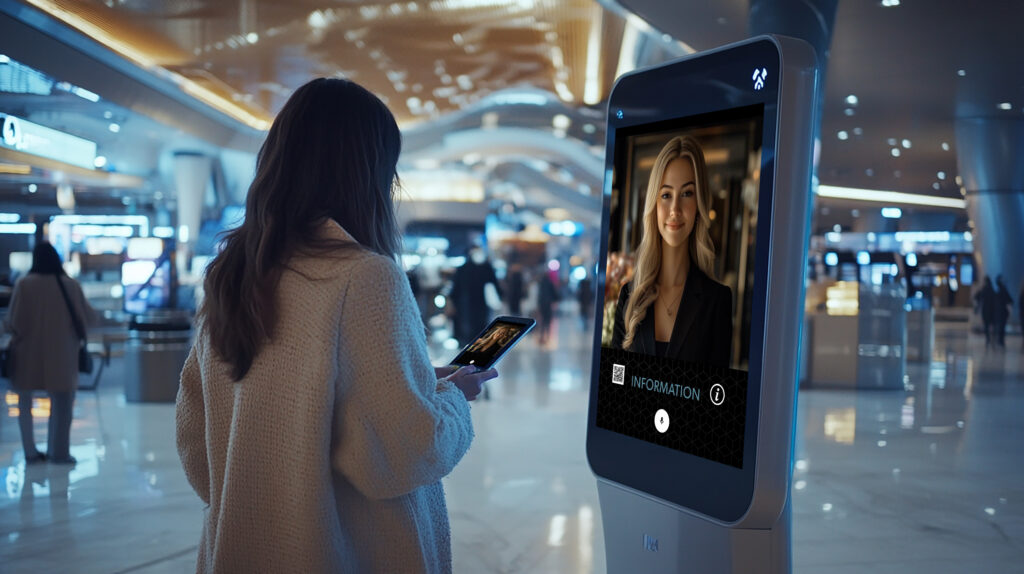
Airports and transit hubs are under constant pressure to move large volumes of people efficiently while maintaining a positive passenger experience. Multilingual wayfinding displays address both challenges by dynamically adapting language and content based on who is present. Instead of relying on static signage or large on-site staff teams, these displays provide clear, context-aware guidance exactly when and where travelers need it.
By detecting passenger presence and adjusting language locally, wayfinding displays can reduce confusion at key decision points such as security, customs, gates, and platform transfers. Content can change automatically based on time of day, flight schedules, or crowd patterns, helping passengers make faster decisions and reducing bottlenecks that slow overall flow.
Running this intelligence locally is what makes the system practical at scale. Processing language selection and content adaptation at the edge avoids the latency, bandwidth costs, and reliability issues associated with cloud-dependent systems. Displays continue to function smoothly even during connectivity disruptions, which is critical in transit environments where downtime can ripple into delays across the network.
From an operational standpoint, multilingual wayfinding significantly reduces staffing demands. Fewer personnel are needed to provide directions or translation support, allowing teams to focus on security, service, and exception handling. At the same time, clearer guidance leads to fewer missed connections, smoother transfers, and improved on-time performance—metrics that matter deeply to operators and passengers alike.
Multilingual wayfinding displays transform signage from a static utility into an adaptive infrastructure asset. By improving visitor flow, lowering staffing costs, and operating reliably without constant cloud connectivity, they offer airports and transit systems a scalable way to handle growing passenger volumes while delivering a better experience for everyone moving through the space.
This is exactly the kind of challenge Sizzle focuses on: building resilient, locally intelligent display systems that keep travelers moving efficiently through complex environments.